
International eSIM That Eliminates Roaming Fees Across 200+ Countries
Imagine landing in Tokyo and your phone instantly connects to a local network without fumbling for a physical SIM card. That’s the convenience of an international eSIM, a digital profile you download that lets you switch between carriers abroad with just a few taps. It eliminates expensive roaming fees by linking you directly to regional plans, all while keeping your primary number active on the same device. The best part? You can buy, install, and activate it anywhere with a stable Wi-Fi connection before you even board the plane.
What a Global SIM Actually Is and How It Works
A global SIM, in the context of an international eSIM, is a single digital profile that stores multiple carrier network credentials, allowing your device to connect to local networks in numerous countries without needing a physical SIM swap. When you activate the eSIM, it downloads a unique international number and a set of profiles that can automatically select the strongest available partner network in your current location. This system works by leveraging wholesale agreements to route data through the local infrastructure, which often provides lower roaming costs than traditional plans. The key practical benefit is seamless connectivity: you buy and install the eSIM before you travel, and it activates upon arrival, handling network handoffs. However, your data speed still depends on the specific local tower partner, not a single global bandwidth.
Defining the Virtual SIM Card That Travels With You
This virtual SIM is not a physical chip but a securely stored software profile embedded directly in your phone. It essentially clones your home number and data plan into a digital format that can instantly connect to local networks abroad. You activate it via a QR code or an app, switching networks without juggling plastic cards. This global SIM card replacement lets your subscription travel inside the device, not on a tray, making connectivity a seamless part of your phone’s operating system.
The virtual SIM is a remotely provisioned, secure software profile that holds your cellular identity, enabling instant network switching across borders without needing a physical card.
Physical SIM vs. Embedded SIM: The Core Difference
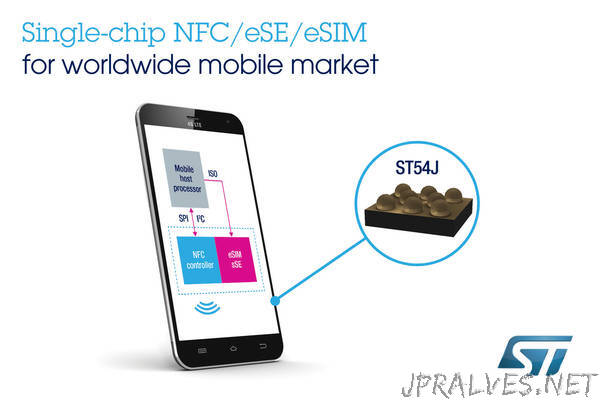
A physical SIM is a removable plastic card you slot into a phone, requiring you to swap it out manually when changing carriers or plans. In contrast, an embedded SIM (eSIM) is a tiny chip soldered permanently inside your device, allowing you to switch international profiles digitally without touching any hardware. For global travel, this means you can instantly download a local carrier’s eSIM profile from an app, rather than hunting for a store to buy a physical nano-SIM. The core advantage of eSIM is the elimination of physical logistics, turning a tedious hardware swap into a seamless software toggle.
Physical SIM requires manual removal and insertion of a card; eSIM stores multiple profiles on a soldered chip, swapped via software—no card, no delay.
How Remote Provisioning Activates Local Networks Abroad
Remote provisioning eliminates physical SIM swaps by securely downloading a new operator profile directly to your device’s eSIM chip. When you scan a QR code or install a plan, the eSIM’s embedded processor uses a secure, encrypted channel to authenticate your subscription with a foreign carrier. This triggers the local network’s HLR to register your device, authorizing immediate access to that country’s cellular infrastructure. Unlike roaming, your device now appears as a native subscriber on the local tower, obtaining a local IP address and obeying local network routing rules rather than being backhauled through a home network. This process is fully orchestrated by the remote eSIM management server, which pushes the necessary credentials in seconds.
- The eSIM’s chip stores the operator profile locally after the initial remote push, enabling instant reconnection on future visits without needing connection to the provisioning server again.
- Remote provisioning selects a local partner carrier based on your destination, so you connect to the strongest available local tower instead of a roaming partner’s tower from another country.
- The activation request includes a temporary network identifier that the local tower validates instantly, bypassing the usual multi-step roaming agreement checks.
Top Reasons Travelers Are Switching to This Connectivity Solution

Travelers are switching to an international eSIM primarily for the immediate, hassle-free connectivity it provides, bypassing physical SIM swaps and airport kiosk queues entirely. You can activate a local data plan before departure and stay connected upon landing without searching for a local carrier. This solution eliminates hefty roaming fees from your home provider, offering transparent, lower costs for multiple countries on a single trip. Why the shift? Because eSIMs let you keep your primary number active for calls while using a separate data line—critical for receiving banking OTPs or work messages. The core draw is practical freedom: one tap to manage data across borders, no plastic cards, and zero disruption to your existing service.
Q: What’s the single biggest reason travelers switch? A: The ability to arrive connected instantly, avoiding local SIM hunting and unpredictable roaming charges.
Eliminating Airport Kiosk Hunts and Physical Swaps
Travelers switching to an international eSIM eliminate the frantic search for airport kiosks upon landing. Instead of queuing to buy a physical SIM, you activate a plan online prior to departure. This also removes the hassle of physically swapping SIM cards, which risks losing your primary line. With an eSIM, your local number remains active for calls while the digital profile handles data. The benefit is immediate connectivity as you step off the plane, bypassing the need to locate a shop or fumble with a SIM tray. This instant digital activation streamlines travel, letting you use navigation or messaging apps without delay.
Maintaining Your Original Number While Roaming
Switching to an international eSIM lets you keep your original number active in your home SIM slot while using a local data plan. This means you avoid the hassle of swapping physical cards or missing calls and texts from your primary line. With seamless dual-SIM compatibility, travelers can receive verification codes, bank alerts, and personal calls without interruption. You simply disable data roaming on your home line to prevent surprise charges, while the eSIM handles all internet needs. No need to forward numbers or use VoIP workarounds—your usual contact number remains reachable as if you never left.
An international eSIM lets you keep your original number live and reachable for calls and texts, while using a separate local data plan for affordable roaming—no physical swaps or service interruptions.
Cost Savings Compared to Traditional Carrier Plans
International eSIMs slash travel costs by letting you buy local data rates instead of pricey carrier roaming packages. You gain significant savings through flexible, local-market pricing. The process to activate cost-efficient coverage follows a clear pathway: first, choose a destination plan; second, install the eSIM remotely; third, avoid daily roaming fees entirely. Typically, you save 50-80% compared to your traditional carrier’s per-day charges, especially for multi-country trips. No more surprise bills—just pay for the data you need, when you need it.
Selecting the Right Provider for Cross-Border Data Needs
The moment your flight lands in Bangkok, you need maps and messaging to work, not a hunt for a local SIM. Selecting the right provider for cross-border data needs means checking if their international eSIM network partners cover every country on your itinerary, not just the popular hubs. You discover the difference when your provider’s app lets you top up instantly from a tuk-tuk, avoiding the panic of losing connectivity at a border crossing. Look for providers offering clear, per-GB costs for each region, so you know exactly what you’ll pay before using data in rural areas. A provider that lets you manage multiple data plans on one device saves you from juggling QR codes mid-trip, ensuring seamless connection across continents.
Regional Coverage Maps vs. True Worldwide Access
A provider’s regional map showing coverage across Europe, for example, often bundles multiple countries under one plan, but this can mask gaps in low-population or remote areas. True worldwide access, conversely, implies seamless connectivity across nearly every nation, including those outside standard regional blocs. When evaluating plans, prioritize global network aggregation—the actual backbone partners—over a map’s color blocks. A regional plan might fail in a non-aligned country where a worldwide plan connects instantly.
Q: How do Regional Coverage Maps differ from True Worldwide Access when traveling through four unrelated countries? A regional map likely covers only those countries if they fall within its defined zone; true worldwide access typically includes all four, regardless of their geographic or political grouping.
Data-Only Plans Versus Plans With Voice and SMS
For international eSIM usage, the core difference between data-only plans and those including voice and SMS lies in communication method. A data-only eSIM is optimal for app-based calling (WhatsApp, Skype) and messaging, but cannot receive traditional SMS for banking verifications or make standard phone calls. Plans with voice and SMS offer legacy compatibility, essential for contacting local services or confirming two-factor authentication codes without internet-dependent apps. This makes data-only cheaper but functionally limited, while voice+SMS plans provide reliability for critical, non-IP communications at a higher cost.
| Feature | Data-Only Plan | Plan With Voice & SMS |
|---|---|---|
| Calling Method | App-based only (VoIP) | Standard cellular & app-based |
| Two-Factor Auth | Not supported for SMS codes | Supported via SMS |
| Cost | Lower per GB | Higher for equivalent data |
| Primary Use Case | Constant internet access | Legacy contact & verification |
Prepaid Top-Ups, Validity Periods, and Fair Usage Policies
When selecting an international eSIM, scrutinize prepaid top-ups for exact data increments, as some providers force bundles that exceed your needs. Validity periods range from 7 to 90 days, and unused data expires immediately after. Fair usage policies impose speed throttling after a high-speed cap, often hidden in “unlimited” plans. Always calculate your daily consumption against the throttle threshold to avoid paying for unusable speeds. Time-limited rollover is rarely offered, so align top-up amounts with your travel duration to prevent waste.
Device Compatibility and Setup Steps
For international eSIM, device compatibility hinges on your handset being unlocked and eSIM-compatible. Most modern iPhones (XR and later), Google Pixels (3a and later), and high-end Samsung Galaxy models (S20 and later) support this. To set up, access your phone’s mobile network settings, select “Add eSIM” or “Download eSIM,” then scan the QR code provided by your provider. Alternatively, manually enter the activation code. Once added, label the line (E.G., “Travel Data”) and set it as your primary data source while keeping your home SIM for calls.
Install the eSIM before your trip to ensure a seamless data connection upon arrival, avoiding reliance on local Wi-Fi for setup.
Verify the APN settings automatically populate; if not, input the provider’s APN manually.
Which Smartphones and Tablets Support This Technology
Most modern flagships handle international eSIMs like a dream. Apple’s iPhone XS, XR, and all newer models—including the US-only eSIM-only iPhone 14 and 15 series—natively support multiple eSIM profiles. Google’s Pixel 3a and later, including the Pixel 8, also let you store several eSIMs for travel. Samsung’s Galaxy S20, S21, S22, S23, and all Z Fold/Flip models (excluding some carrier-locked US versions) support this. For tablets, cellular-capable iPads since the 2018 Pro and 2019 Air support eSIM, but only a few Android tablets like the Samsung Galaxy Tab S7+ or Surface Pro X do. Always check your device’s IMEI against your provider. eSIM-only phones (like US iPhone 14) require a physical SIM workaround for some regions.
Checking Carrier Lock Status Before You Leave
Before purchasing an international eSIM, you must verify your phone’s carrier lock status. A carrier-locked device will reject any foreign eSIM profile, leaving you without data. Contact your current carrier or check your phone’s settings under “Cellular” or “Network.” If locked, request an unlock—most carriers provide permanent unlocks for eligible devices. Complete this before travel to avoid connectivity hassles abroad.
Confirming your phone is carrier-unlocked ensures your international eSIM activates immediately, preventing a wasted plan or emergency service gaps.
Installing Profiles via QR Code, App, or Manual Entry
Setting up an international eSIM is straightforward. Installing profiles via QR code, app, or manual entry each offers distinct advantages. Scanning a QR code is the fastest method—simply point your camera at the provided code to trigger automatic installation. App-based installation streamlines the process further, often pre-filling credentials and requiring only a single tap to activate. Manual entry serves as a reliable fallback, demanding you type the SM-DP+ address and activation code precisely. While QR codes are universally supported, the app route provides built-in data management and top-up convenience.
| Method | Best For | Key Action |
|---|---|---|
| QR Code | Speed & simplicity | Scan with device camera |
| App | Managed plans | Tap to install & manage |
| Manual Entry | Compatibility fallback | Type details accurately |
Practical Tips for Maximizing Performance Abroad
To maximize performance abroad with an international eSIM, always pre-select a local network profile in your device’s settings upon landing, rather than relying on automatic roaming. This forces a direct connection to the strongest local carrier. Before traveling, disable background app refresh for non-essential apps, as constant syncing drains data and battery. For critical tasks like navigation, download offline maps in advance to preserve your high-speed data allowance.
If your connection feels sluggish, manually switch between available partner networks in the eSIM’s carrier list—one often provides significantly faster latency for your location.
Finally, enable low-data mode and Wi-Fi calling if your eSIM supports it, ensuring stable calls even on weak cellular signals.
Managing Dual SIMs: When to Use Virtual vs. Physical
When traveling abroad, use a virtual eSIM for primary data while keeping your physical SIM active for critical legacy services like banking SMS or two-factor authentication. This ensures seamless connectivity without sacrificing security. Reserve the physical SIM slot exclusively for carriers with poor eSIM support or for local prepaid cards in regions where eSIM activation is unreliable. A virtual eSIM also allows instant carrier switching mid-trip to avoid throttled speeds, while physical roaming SIMs are better for extended stays where local rates undercut international eSIM data bundles. Always disable background data on the physical SIM to prevent accidental charges.
- Activate virtual eSIM for data—keep physical SIM locked to voice and SMS only.
- Use physical SIM when traveling to countries where eSIM registration fails or is delayed.
- Switch virtual eSIM profiles for carrier hopping if one network degrades in a remote area.
- Leave physical SIM in only for critical bank apps that refuse to authenticate without its presence.
Avoiding Unexpected Charges With Settings Tweaks
To avoid unexpected charges with an international eSIM, disable automatic network selection in your device settings; manual selection prevents connecting to pricier roaming partners. Turn off data roaming for unused SIMs and set the eSIM as the primary data line. Deactivate background app refresh and automatic downloads over cellular. Disabling iMessage and FaceTime activation for your primary number can also stop accidental SMS triggers. Finally, configure a strict data usage alert within your phone’s settings to cut off service before surpassing your eSIM plan’s limit.
Speed Differences on 4G, LTE, and 5G Networks Overseas
When roaming with an international eSIM, speed differences between 4G, LTE, and 5G networks overseas are significant and location-dependent. While many countries label both 4G and LTE identically, true LTE often delivers faster, more consistent speeds than basic 4G in rural or congested areas. Abroad, 5G availability remains patchy, often limited to city centers, and may drain battery faster without offering stable throughput. For reliable performance, prioritize networks with strong LTE coverage over searching for 5G, as LTE provides the best balance of speed and consistency across varied international infrastructures. Always check your eSIM’s supported bands to ensure compatibility with local 4G/LTE frequencies for optimal speeds.
Common Pitfalls and How to Avoid Them

A major pitfall with international eSIMs is buying a plan that doesn’t actually support your specific destination or phone model. Always verify device compatibility on the provider’s website before purchasing, and check coverage maps for the countries you’ll visit. Another common mistake is installing the eSIM profile before departure, which can activate the data plan early and waste your allowance.
A key insight: install the profile at home, but turn off the eSIM line until you land, then activate it only when you’re ready to use data.
Also, avoid overlapping your primary SIM’s data—disable auto-roaming on your main line to prevent surprise charges. Finally, don’t assume all eSIMs support tethering; read the fine print if hotspot use is critical.
Activation Delays Due to Time Zone Mismatches
A primary cause of international eSIM activation delays is the mismatch between the user’s local time and the provider’s time zone. When a user purchases a plan late in their day, the provider’s support staff may be offline, stalling manual verification steps. Similarly, network-side provisioning often triggers during business hours in the provider’s home region. Some activation windows are pre-scheduled to a specific region’s midnight, effectively locking the profile until that local time arrives. To avoid this, confirm the provider’s support hours in your time zone before purchase. Check if activation is fully automated or requires manual review, and pre-purchase at least six hours before needing service.
- Choose providers with real-time, automated activation systems that operate fully independently of any single time zone’s business hours.
- Schedule your eSIM purchase and installation to occur during your own morning or early afternoon, allowing a buffer before evening use.
- Read the plan’s fine print for any specific grace period or “activation by provider timezone” clause that could introduce a delay.
Limited Support for Hotspot or Tethering Features
A key pitfall with international eSIMs is the limited tethering compatibility across providers. Many data-only eSIM plans explicitly prohibit hotspot usage, leaving you unable to share your connection with a laptop or tablet. Always verify the fine print before purchasing, as https://baztel.co/esim-plans/esim-china-mainland even a “high-speed” data plan may throttle or block tethering entirely. To avoid this trap, look for providers that explicitly advertise hotspot support in their plan features, such as Airalo or Holafly on specific packages. Test the hotspot function immediately upon activation to ensure it works within your device’s settings.
Always confirm a provider allows tethering before buying, as many international eSIMs restrict this feature, leaving you without shared connectivity.
What Happens When You Return to Your Home Country
Returning home can trigger data disasters if you forget your international eSIM setup. Instead of relief, you face surprise charges as your phone latches onto a local partner network, burning through leftover roaming credit. To avoid this pitfall, deactivate your international eSIM immediately upon landing. Follow this sequence:
- Go to your phone’s cellular settings and toggle off the eSIM line.
- Switch your primary line back to your home carrier.
- Reset your device to clear any lingering network preferences.
- Restart to ensure the priority change sticks.
Skipping this leaves you paying for data you thought was paused.
What Exactly Is a Global eSIM and How Is It Different from a Physical SIM?
The Core Difference: Embedded Chip vs. Removable Plastic
Why This Matters for Travelers and Remote Workers
How Does a Cross-Border eSIM Actually Work When You Travel?
Activation Without a Physical Swap: Scanning a QR Code
How Data Roams Across Multiple Countries on One Profile
The Role of Local Network Partners Behind the Scenes
Key Benefits of Using a Travel eSIM Over Traditional Roaming or Local SIMs
Instant Connectivity Upon Landing: No Airport SIM Hunt
Keeping Your Home Number Active While Using a Data-Only Plan
Cost Predictability: Avoiding Surprise Roaming Bills
How to Choose the Best Global eSIM Plan for Your Specific Trip
Regional vs. Worldwide Plans: Matching Coverage to Your Itinerary
